Boneyard Media Kim Simpson's song IDs and more – joint articulation – dancing skeletons – new connections

February 19, 2007

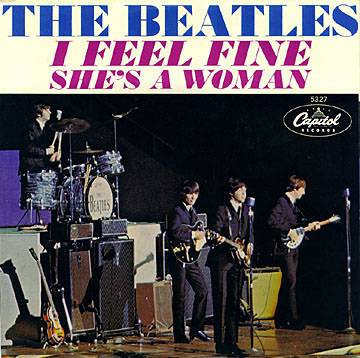
Song ID: The Beatles – “I Feel Fine” (1965)

Filed under: Beatles,Song IDs,Vinyl — Kim @ 6:03 am

beatles_i_feel_fine

I discovered my dad’s “I Feel Fine”/ “She’s a Woman” 45 in a basement box when I was a grade schooler. It was pretty scuffed up, so it sizzled enticingly when I put the needle down. The opening riffs on each side of the single blasted through with such abandon that I forgot all about the white noise. It turns out the white noise enhanced the music, giving that 45 an irreplacable, unique quality.

So if the experience of finding a little treasure box in our basement – which contained a single so fabulous that I can say in all honesty that I first took drugs when I was eight – makes it easy for me to say that “I Feel Fine” is one of my favorite singles, maybe what I’m really saying is that it’s my favorite material single. Is there more legitimacy to one’s experience with music and the value one assigns to it when it’s tied in with one’s tactile relationship with it, like this Beatles 45 with white noise so unique that it added something precious to the mix? Or the experience of pulling out a hidden box and finding it there in the first place? (Or what about a song’s relationship with a beloved radio? For example, I’m sure none of the Top 40 hits during the summer of 1979 would mean as much to me as they do now had I not gotten my first transistor then.) I don’t think I’m talking about fetishism when I say that the music most meaningful to me has a distinct material tie-in.

* * *

When the Beatles CDs came out in the late 80’s, I was convinced producer George Martin had made some sort of terrible mistake, especially with “I Feel Fine,” “She’s a Woman,” “I’ll Be Back,” and “Yes it Is.” These became my four main reasons why I thought CD technology was killing something vital in music. And no one else seemed to care. Then I realized, a long time later, that only the US versions of these songs had reverb, which is what I was missing so badly. So when the “Capitol Albums” box sets came out, which featured the crucial American mixes, I was a reasonably happy consumer and put my voice-in-the-wilderness complex behind me. Still, even though I know vinyl purists can be a silly bunch, when it comes to “I Feel Fine” there’s still ultimately no other way for me than that very same 45 I first discovered. Here’s a straight dub of it compared to the Past Masters Volume One CD version (that red number ones album that everyone owns uses the same dead UK mix).

The Beatles – “I Feel Fine” (Capitol vinyl 45)

The Beatles – “I Feel Fine” (Past Masters Volume One CD)

February 16, 2007

Song ID: Francoise Hardy – “Avec Des Si” (1968)

Filed under: Song IDs — Kim @ 6:13 am

francoise

She’s the ultimate chanteuse in my book, but you still need to sort through a lot of pedestrian stuff in her mountain of albums if you want to be sure not to miss anything particularly exquisite, like “Avec Des Si.” The song first appeared on a 1968 French EP and then showed up on a US album (exclusively, for a while) in 1969. (I know this from hanging out at the Francoise Hardy Discographie.) The beauty of this one is that the verses sound a bit garden variety until they morph into these throbbing, multicolored, swirling choruses. It’s the last song on the record, and the first time I heard it, I just sat there in my chair, the needle spinning in the inner groove after the last chorus fade, wondering what on earth I’d just heard.

Francoise Hardy – “Avec Des Si”

February 15, 2007

The Lovemeknots – “Winchester 73” (1993)

Filed under: Vinyl — Kim @ 7:54 am

010.jpg

The Lovemeknots were a hard-working staple on the Indianapolis club scene until 1995 when they called it quits. They put out 3 CDs and a vinyl 3-song EP called Home Tonight, which has that understated college rock feel that almost begs you not to notice it. This is fine, because when you take it for a spin and get charmed you sorta want it to be your own little secret anyway. “Winchester 73” is the EP’s bruiser, complete with righteous cowbell.

The Lovemeknots – “Winchester 73”

February 14, 2007

Song ID: The Knack – “Good Girls Don’t” (45 version) (1979)

Filed under: Childhood Corruption,Song IDs,Vinyl — Kim @ 6:16 am

The_Knack_Good_Girls_Don't_cover

It’s 1979 – I’m ten years old and I’m at the drugstore with my mom. We run into my friend and his mom. He shows me what he’s just bought with his allowance money – the new single by the Knack. I end up going home with them and we listen to both sides of his 45 over and over and eat Zingers for the rest of the day.

I’m linking to the clean radio version here, with the line that ends with “chance” instead of the one that ends with “pants” and the line that ends with “place” instead of the one that ends with “face.” I prefer this one to the intolerable Get the Knack album version because the thought of singer Doug Fieger salivating over a minor happens to creep me out. (He’s the guy second to the far right and he’s always reminded me of a leering cop show character who ends up in handcuffs before the closing credits roll.)

The Knack – “Good Girls Don’t” (45 version)

February 13, 2007

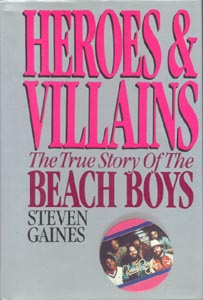
Steven Gaines, Heroes and Villains: The True Story of the Beach Boys (1986)

Filed under: Beach Boys,Books — Kim @ 7:24 pm

heroesvillains

Ever since its publication in 1986 (regrettably reprinted in 1995), Steven Gaines’ “true story” has been the standard, most abundantly available version of the Beach Boys’ history, which is unfortunate for at least four reasons:

1 – The book has done more than a little to surgically attach the freak show features one now tends to associate with the Beach Boys. The tabloid approach makes for some fast and furious page-turning, but you never ever get the impression that Gaines’ motivations go beyond that. In the book’s intro, Gaines talks about first being transfixed by Brian Wilson’s eyes, “those cold, blue eyes” which eventually turned his alleged “fascination” with the Beach Boys into a “passion.” When all’s said and done, we learn that those happen to be the eyes of a “schizophrenic” invalid who is now safe in the hands of Dr. Eugene Landy, who declares himself “practically a member of the band” on the last page. (If you’re not familiar with Landy, he’s the Svengali doctor who misdiagnosed Wilson, it turned out, abused him emotionally, and lost his license in the early ’90s over his unorthodox practices.)

2 – The book’s mistitled. Gaines’ decision to handle his subject from a sensationalistic point of view makes little room for any discernible heroes other than, perhaps, Landy. And while Wilson’s mother Audree and his first wife Marilyn are treated sympathetically, they are done so as pitiable victims.

3 – Gaines can’t write about the Beach Boys’ music. I say “can’t” instead of “is unwilling” because he actually makes occasional, tossed off, critical attempts but stumbles badly when he does. Here’s Gaines’ complete analysis of the group’s cult favorite, Friends: “a boring, emotionless LP.” Here he is on The Beach Boys Love You: “The best promotional campaign in the world couldn’t have helped [it].” But those are acquired-taste cult albums, you say? Here’s Gaines on “Surfin’ “: “The song was no knockout…nasal, whining, and childlike”; and here’s the most irksome – his take on one of the group’s uncontested core albums, The Beach Boys Today: “The album was not one of Brian’s best works, consisting mostly of a melange of uninspired car tunes.” I’m not even sure what album he’s really talking about here, and if he’s just gotten his records mixed up, I can’t figure out which one he might have really meant.

4 – And this leads to the book’s biggest problem, which is that Gaines evidently despises the Beach Boys’ music enough to disregard it as a significant part of the story. And I’d say that if having a tin ear when endeavoring to write about a cultural phenomenon that happens to be of a primarily musical nature is perhaps forgivable, the consistent failure to acknowledge that phenomenon for what it essentially is is much less so.

February 12, 2007

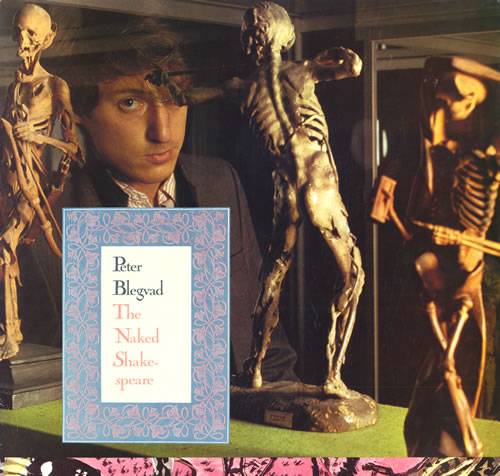
Album ID: Peter Blegvad – The Naked Shakespeare (1983)

Filed under: Album IDs — Kim @ 6:21 am

Peter-Blegvad-The-Naked-Shakesp-558762

posted by Stanislav (Just That Junction, Vermont)
The year was 1983. XTC just released one of their most important albums, English Settlement, and Andrew Partridge felt confident about producing other artists. His American friend, Peter Blegvad, who moved to England prepared a new album The Naked Shakespeare for Virgin and asked Partridge to produce it. Blegvad was known as an avant-garde artist, a former member of Slap Happy and Henry Cow. It’s maybe a little surprising, but Blegvad’s songs are only partially avant-garde. They are somewhere on a surprisingly thick borderline between weird and perfectly normal – his songwriting owes a lot to John Lennon and Bob Dylan. A lot of it is also a conscious attempt to be pop – Dave Eurythmic Stewart nearly ruins the opening song, the only one on this album that he, instead of Partridge, produced. But there is plenty for us music lovers here. A careful listener will be rewarded with a lost jewel of authentic beauty which demands careful listening. It’s a deep and layered record. The song “Powers In The Air” is my favorite.

Peter Blegvad – “Powers In The Air”

February 11, 2007

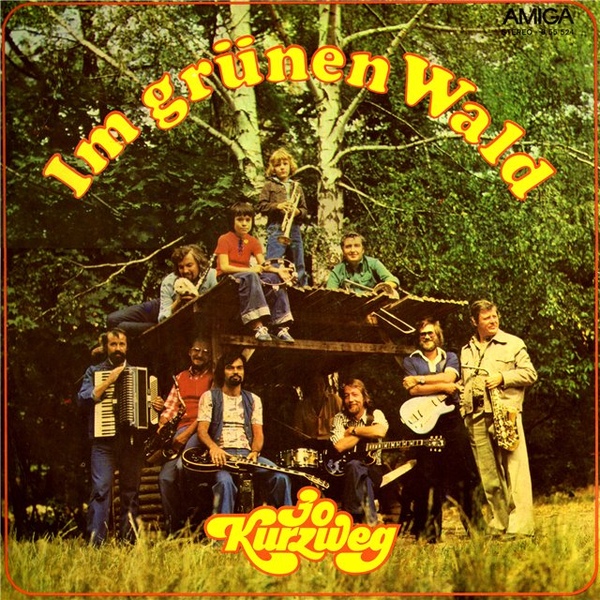
Sunday Service: Jo Kurzweg – “O Täler Weit, O Höhen” (1977)

Filed under: Song IDs,Sunday Service — Kim @ 6:27 am

jokurzweg

The Jo Kurzweg ensemble is like a German Living Strings/Andre Kostalanetz Orchestra for the polka party set. Each track is a medley of at least four different tunes sung by booming ghost choirs over electric guitars and alternating rock and polka beats. Here’s the first portion of one of these medleys. It features a Mendelssohn piece which some may recognize as the revamped American church hymn “O God the Eternal Father.” As for the cover, is this really the group? No clue, but I like to think so.

Jo Kurzweg – “O Täler Weit, O Höhen” medley

February 9, 2007

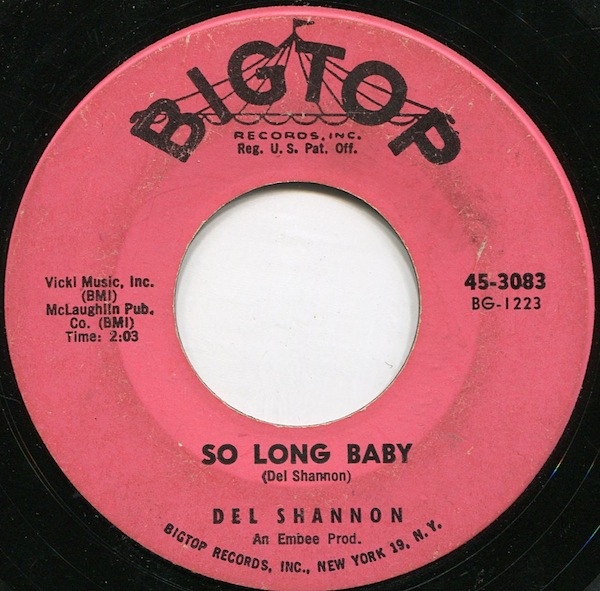
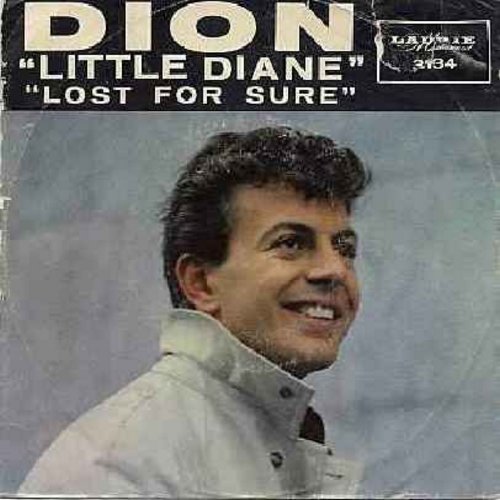
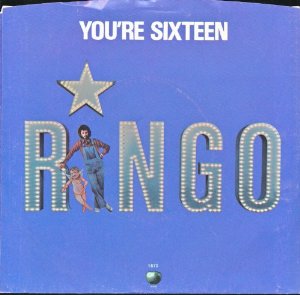
Song IDs: Del Shannon, Dion, and Ringo Starr

Filed under: Beatles,Song IDs — Kim @ 6:23 am

solongbaby  dionlittlediane  ringo16

Q: What do these these three songs have in common?
A: They’re each US Top 40 hits that feature the kazoo.

Del Shannon – “So Long Baby” (1961)
Dion – “Little Diane” (1962)
Ringo Starr – “You’re Sixteen” (1973)

February 7, 2007

Song ID: Briard – “Chirpy Chirpy Cheep Cheep” (1979)

Filed under: Borrowed Tunes,Finland,Song IDs — Kim @ 7:40 pm

clipboard01

If you’re already familiar with this song either as a U.S. hit by Mac and Katie Sissoon (UK-based Trinidadians) in ’71 or the Euro smash by Middle of the Road that same year, you might especially enjoy this tender treatment by a Finnish now-you-see-’em-now-you-don’t outfit called Briard.

Briard – “Chirpy Chirpy Cheep Cheep”

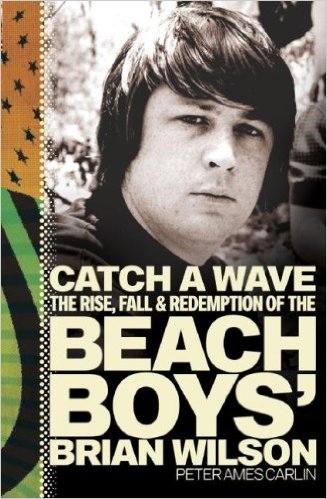
Peter Ames Carlin, The Rise, Fall and Redemption of the Beach Boys’ Brian Wilson (2006)

Filed under: Beach Boys,Books — Kim @ 7:19 pm

carlin-wilson

Just finished this and, as a Brian Wilson cultist, I’m ready to rank it among the best books so far about him or the Beach Boys for at least four reasons:

1) It’s got a happy ending. Carlin hammers home the recurring theme that every stage of Wilson’s life is affected by a dynamic creative/business collaborator for better or (often) worse, then he leaves us with the clear impression that Wilson circa ’06 is in the hands of folks (wife Melinda being at the forefront) who equate his personal creative vision and personal happiness with financial success. And it’s about time, we sigh.

2) It frames the Beach Boys saga, with all of its familiar, sordid aspects, in the context of Wilson’s creative frustration. Carlin emphasizes that the perceived rejection of Wilson’s Smile material by the rest of the group, and eventually by radio and the buying public, played a major role in his late-sixties collapse. This wasn’t the only factor, of course, but it was a huge one, and Carlin doesn’t let us forget it.

3) It plays down the “heroes and villains” model so much Beach Boys writing drifts toward (and I’m not necessarily thinking Steven Gaines’ Heroes and Villains here, in which everyone’s a villain). The Brian vs. Mike concept, for example, is one that Brian fans eat for breakfast, and although Carlin is obviously on the Brian team (is anyone on the Mike team, come to think of it?), he goes out of his way to give us as sympathetic an image of Mike that a book aimed squarely at Brian fans could possibly give.

4) Carlin speaks the language of the true Brian Wilson faithful. This is perfectly OK because this ilk deserves a book that puts the music front and center, and while Carlin can and does talk about the music on its own merits with a critical eye, it’s shaded with the Church of Brian doctrine that while translations of the Truth may go awry (productions, arrangements, lyricists), Brian’s essential musical vision is 100% pure and reliable. Thus, The Beach Boys Love You is rightfully heralded, song-by-song, as a “darkly lovely” masterwork, Friends as “transcendentalist” (Carlin’s audience will know that he’s not just talking about nature and Thoreau here), and the unlikely 2004 miracle of Smile as a catalyst for redemption. You can’t believe everything you read, but because this is what most of us want to believe anyway, it sure feels nice.

« Newer PostsOlder Posts »

Powered by WordPress