Bird count: 14.
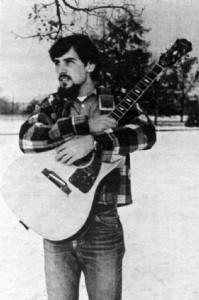
Dave Bixby’s moody and fascinating Jesus folk album, Ode to Quetzalcoatl, which I wrote about here, is now available on CD via the Guerssen label in Spain. The record continues to generate a good bit of online chatter, and I’ve since gathered a few more tidbits about it along with the cult group that spawned it thanks to the reissue itself, an email conversation with a former movement member named Dave Henrickson (who commented on that earlier post), and a reading of Al Perrin’s Many False Prophets Shall Rise:
— The cult Bixby belonged to originated in Grand Rapids, Michigan and was simply called “The Movement” or “The Group,” led by an extraordinarily charismatic and manipulative guy named Don DeGraaf. Any Don or Donald DeGraafs you dig up on Google are probably not him. Henrickson had heard that the real one died in a helicopter accident.
— The movement arose out of the Reorganized Church of Jesus Christ, a Mormon offshoot, and Bixby’s title reference has to do with Mormon beliefs that Quetzalcoatl is a manifestation, through legend, of Jesus Christ’s Book of Mormon visit to the Americas.
— Bixby is still making music, and currently stages war reenactments in Arizona. This makes sense after reading Perrin’s book, which depicts Bixby not as the docile and depressed introvert we hear in Ode to Quetzalcoatl, but a lively, war game dynamo dressed in Army fatigues who served as one of the group’s higher-ups. The group’s most ardent members, it turns out, engaged in militaristic “campouts” as part of the brainwashing process.
— The group, which believed DeGraaf to be an onmiscient, modern incarnation of the Biblical prophet Elijah, initially raised money by selling combs for a dollar a pop for the sake of their “youth group fighting drugs.”
— Probably because group maintenance became too much of a chore for DeGraaf, the group devolved, circa the mid-seventies, into an Amway-selling army that traded in Jesus for est (Erhard Seminars Training). This likely jibed more cozily with DeGraaf’s private-airplane lifestyle, and it’s also the point where Bixby, to his credit, finally bailed.
— As Dave Henrickson said in his comment from the previous post, the album was definitely out by May 1970, when he remembers trying to sell copies at a Grand Valley State University flea market. He also remembers hearing Bixby sing those songs at meetings as far back as early summer ’69. His memory is that while none sold at the fleamarket, he was able to sell one to his uncle, an elder in the RLDS church.
— I like Al Perrin’s assessment regarding the positive appeal Bixby and his music had on the group: he sounded “like Burl Ives.”

It all came from my alarmingly sardonic 6 year old son while listening to the car radio:
1) KGSR (Triple A): “(Sigh) Just another lady pretending to have a Western accent.”
2) KHFI (Hits): “This song sounds like a TV commercial for Barbies.”
3) KXMG (Hip Hop): “I just realized that these songs have no goals.”
4) KMFA (Classical): “No one cares anymore about Tri-Kofsky’s 33rd Symphony.”
5) KLBJ (Classic Rock, after airing Black Sabbath’s “Iron Man”): “I think we better hear that one again.”
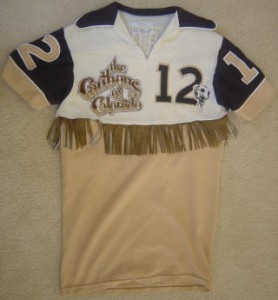
Next to the ’76 Chicago White Sox, the ’78 “Caribous of Colorado,” who lasted for only one season in the North American Soccer League, might have had the funniest uniforms in pro sports. Wikipedia: “The lasting legacy of the Caribous is one of the most unusual, infamous uniforms in soccer history. Going with a western-style motif, the players wore brown and tan jerseys that included a strip of leather fringe across the chest.” Have a nice wallow over here.

Albums of the Year 2009
1 – The Wax Wesleys – I’m Aware, I Don’t Care. Highlight: “Punch Me, I Would Like That.”
2 – Cathy Sinus – Faux Furs Electric Don’t Touch Don’t Look Wait Do Look. Highlight: “Animal Weapon Underthing.”
3 – First Clouds/Then Karo – Vibrato Envy. Highlight: “Never Bending.”
4 – The 3:12’ers – Synthpad Scripture. Highlight: “P.M.S. (Post Metrosexual).”
5 – The Cast from “Where the Wild Things Are” – Chant Lullabys Inspired by the Soundtrack to “Where the Wild Things Are.” Highlight: “I Seethe.”
6 – Sergei and Sarah Gu – Hear Us Swallow. Highlight: “Under My Tongue.”
7 – The Killtwisters – Whiskey Wizard. Highlight: “You Put the Q in Quaver.”
8 – Agronomy – Growbot. Highlight: “Percolation Fortnight.”
9 – Traviz Milk-it featuring Malt-O-Meel – In Pieces, In Peace. Highlight: “My Components, Version 3 (KitchenAde Remix).”
10 – Affectation Station – Invocation to the Station. Highlight: “Affectation Station Celebration.”
11 – The Slumberites – The Dour Masochist’s Mystery. Highlight: “Elmer Fudd Reverie.”
12 – Elko – American Asphalt Mile By Mile. Highlight: “My Longest Hour (Acoustic Version).”
Note: OK, they’re all fake, so no need for researching. But haha! I tricked you. Just be glad I opted out on the fake blurbs.
posted by Kim Simpson

This chubby alphabet book is out of print but well worth the effort to dig up. It’s a classic. Some sample entries:
“Airplane: in his airplane Santa Claus seems happy. But how many people really know if they are happy?
…
Artichoke: artichokes have no connection at all with Santa Claus. They do not make good presents, and you cannot make a Santa out of an artichoke.
…
Bottom: in Africa there are nasty monkeys who display their bottoms to Santa. This is neither very nice nor very polite. That’s why they never get presents.
…
Confuse: sometimes Santa’s elves disguise themselves as red-and-white toadstools. It is important not to get the two things confused and, above all, not to eat either one, because you could die.
…
Fortunate: it is fortunate that Santa Claus doesn’t have a daughter. It is obvious how he would dress her, and she would run the risk of being eaten by a wolf.”
posted by Kim Simpson
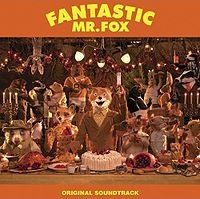
To: Wes Anderson
Re: Pointless pop records in your movies
After watching The Fantastic Mr. Fox, I’m requesting that you please drop the classic pop record shtick you’ve used for every single one of your movies for the following reasons:
1) The records mostly don’t work. All those records you shoved into Rushmore, and even The Royal Tenenbaums were fun in a head scratching sort of way, but having just seen The Fantastic Mr. Fox, I’m getting the distinct impression that you’re now subscribing to Quentin Tarantino’s hobbyhorse method of tossing favorite records into a film willy nilly just to be cool.
2) More often than not, the records hurt the movie. “Heroes and Villains,” “Street Fighting Man,” “Old Man River,” and, especially, “Let Her Dance,” add nothing to the singular visual experience you’ve offered viewers with The Fantastic Mr. Fox. In fact, they jerk viewers out of the wonderland you’ve coaxed them into by introducing clashing contexts, like you did with the Clash in The Royal Tenenbaums and the distracting David Bowie material in The Life Aquatic with Steve Zissou. Your insistence on overplaying Peter Sarstedt’s “Where Do You Go To (My Lovely)” in The Darjeeling Limited added unnecessary pounds of dead weight to an already sluggish situation.
3) More often than not, the movie hurts the records. I’m of the opinion that the visual images movie makers ask viewers to associate with certain songs is no trifling matter, and a song’s appearance in a movie can do irreparable damage to a song. I understand the argument that pop songs are essentially commercial entities that are, in a way, consigned to an existence of eternal molestation merely for being what they are. But damage is still damage.
Illustration A: Sarstedt’s song, a UK no. 1 hit in its day, has already been around the block. But the distinct image that unfortunate viewers of Darjeeling are now forced to associate with it – Jason Schwartzman moping around with his iPod and a bored, anorexic Natalie Portman – has undoubtedly murdered a certain element of that song’s je ne sais quoi.
Illustration B: When the Bobby Fuller Four’s “Let Her Dance” crashes in for the closing credits of Mr. Fox, viewers are asked to associate the emotionally complex classic with animals dancing in a supermarket. I felt my heart sink when I heard it play, realizing that a song that made me lose my breath the first time I experienced it would now be remembered by my own kids as an incidental soundtrack item in an animal movie. The song hurt the scene and the scene hurt the song.
4) Movie directors have a unique opportunity to introduce new music to audiences. Here’s one thing about your latest movie that makes me think you have it in you to change your ways. The very best musical moment in this film was the song you had the animated Jarvis Cocker do. That was so magical that I wondered through the entire film why you didn’t just get Cocker to do the entire soundtrack. It meshed with the rest of the film in a way that none of those records did.
This is my basic counter argument for those who say “the music biz survives on movie and commercial tie-ins nowadays and you might as well get over it”: Movie directors, advertisers, and TV people would be doing the music biz a lot more good if they commissioned more original music. It would also make them look more inventive and less like those lazy minded types who devised the CSI intros featuring recordings of the Who as opposed to commissioning original theme music. (Spike Jonze, to his credit, used freshly composed music for his Where the Wild Things Are; to his discredit, the soundtrack and movie both turned out utterly cheerless. But still.)
Thanks for reading. Here’s to future days, future movies, and future original soundtracks.
 I keep a list of all the movies I’ve seen and I realize that one of the main reasons I do this may be to translate such a blatantly recreational activity into something that appears constructive. But when I look at my list I’m always surprised over how many movies I’ve seen but don’t remember anything about save for a few stray words, songs, and images.
I occasionally undertake this little exercise that excavates whatever I can remember about a movie in one sentence. Below is a sampling from the W section. Note: Movies I really like (Wattstax), movies I especially dislike (Garden State), and movies I’ve seen more than once (Waiting for Guffman) don’t seem to work well for this exercise.
Waking Life (2001): A young man wakes up in a cartoon nightmare world in which all the inhabitants worship the sounds of their own voices.
Waking Ned Devine (1998): An old pig farmer cycles nude to the sound of bagpipes, all for some fried chicken.
Walkabout (1973): Rod Stewart narrates this story of a broken, nudist desert family in the heart of Australia.
Wanderers, The (1979): A little girl breaks greasers’ fingers at a bowling alley, then runs off with Bob Dylan.
Warriors, The (1979): Street gangs with baseball bats do choreographed battle to the music of Joe Walsh and the catcalls of Sean Penn.
Watcher in the Woods (1980): German Shepherds and talking mirrors spread nasty rumors about Hayley Mills in the middle of a forest.
Watership Down (1978): Several hundred cartoon rabbits find ways to tell each other apart against the ethereal backdrop of Art Garfunkel.
Way We Were, The (1973): A woman’s efforts to sing ballads in the voice of Bugs Bunny can’t keep the man she loves from leaving.
Weird Science (1985): Two high school boys use electricity, beakers, and underpants to disrupt an Oingo Boingo concert.
Welcome to the Dollhouse (1996): After getting kicked out of her brother’s organ/sax combo, a homely young girl forms a city choir.
What Lies Beneath (2000): Harrison Ford’s laptop flashes gibberish messages, prompting Michelle Pfeiffer to dump both of them into a lake.
posted by Kim Simpson

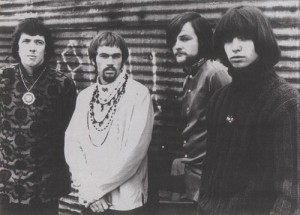
It’s fun listening to Iron Butterfly because they temper all their heavy handedness with sprightly organ pop. Just listen to side one of In-A-Gadda-Da-Vida and see what I mean. Even more appealing to me is how they occasionally evoke – whether unwittingly or not – certain soundtrack elements of Hawaii Five-O. One of my favorite musical bits Morton Stevens did for the show is a bit of furrowed-brow exotica I think of as the “busybody theme” – it plays either while Danno, Chin and the rest, all dressed in suits, go marching around the entire island, knocking on doors, peeking down manholes, burrowing through gardens, and sticking their arms in fishbowls, all under the orders of McGarrett. It also plays while bad guys are shown making nefarious preparations – licking stamps and sticking them on piles of boxes full of counterfeit money, putting all 450 pieces of a sharpshooter together, etc. The “busybody theme” makes this all quite tolerable. So here it is, along with two Iron Butterfly classics that have Five-O written all over ’em.
(For the record, the first season debuted in ’68 while these two IB songs came out in ’69. Also for the record, Mike Quigley’s longstanding collection of episode “anal-yses” at the Hawaii Five-O Home Page has to be one of the seven wonders of the virtual world.)
Update: After touching base with Mr. Mike at H50HQ, I realize now that I’d mistaken the music I first posted – which debuted in the sixth season “Hookman” episode – with a very similar sounding “busybody” predecessor heard all throughout the previous seasons. I’ve now posted that earlier theme at the top with the “Hookman” version below it.
Morton Stevens – Hawaii Five-O “Busybody Theme”
posted by Kim Simpson
Powered by WordPress